.png)


Signal-based outbound is one of the strongest GTM motions in B2B in 2026.
A few of our clients at workflows.io drive 20 to 40 percent of their pipeline through signal-based plays alone. The rest still comes from cold outbound and content, but the signal-based layer is where the highest reply rates and the cleanest deals come from.
The premise is straightforward.
B2B accounts give off intent signals long before a buying conversation. They visit your pricing page, they post about a problem you solve, they hire for a role that needs your product, or they jump from a customer account to a new company.
The teams that capture those signals and act on them quickly are the ones winning deals in 2026. and the ones that miss the signals end up cold-emailing the same account months later, when the buyer has already chosen a different vendor.
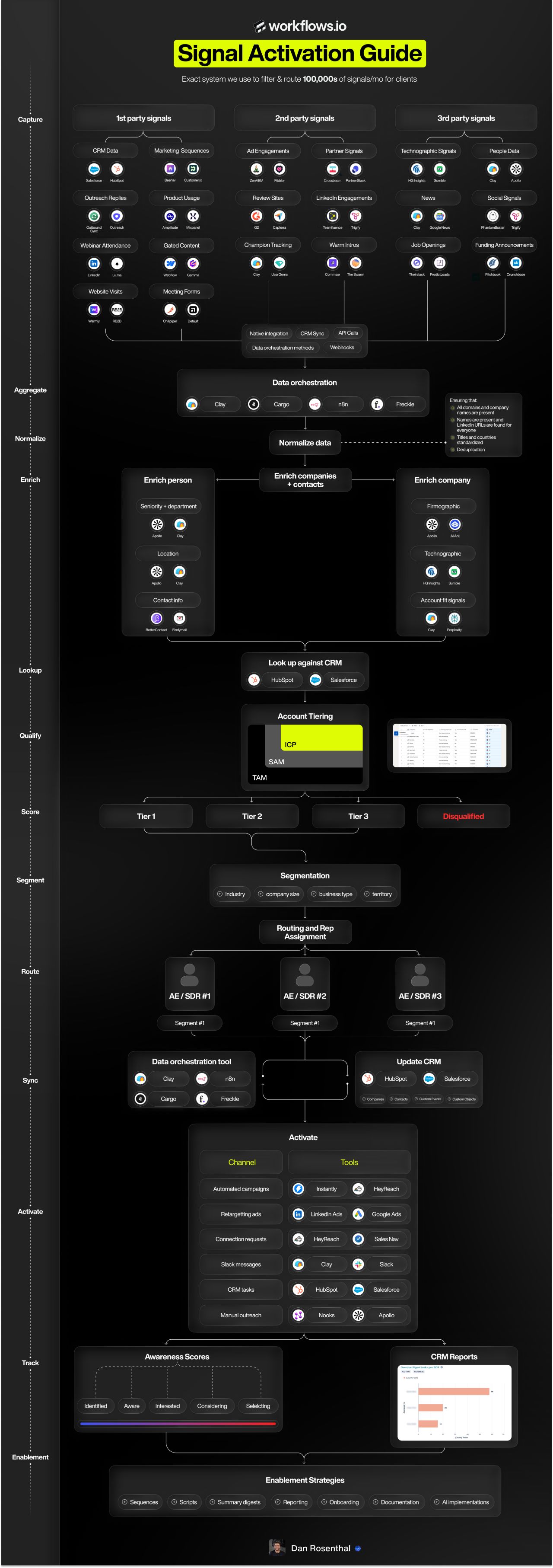
This guide breaks down the 26 intent signals worth tracking, the three categories they fall into, and the 13 steps it takes to turn them into pipeline.
What is signal-based outbound
Signal-based outbound is exactly what it sounds like. Instead of sending cold outbound to a static list, you send outbound triggered by a real-time signal that suggests buying intent.
A signal is anything that hints a prospect is in the market for what you sell. It could be a visit to your pricing page, a job change away from a current customer, a comment on your founder's LinkedIn post, or a funding announcement that means budget is freshly available.
The play turns the signal into a multichannel sequence in your voice, with the first message referencing exactly what the prospect did. The reply rate goes up because the message lands at a moment when your space is already on the prospect's mind.
For the broader architecture of how to set this up across your tech stack, see how to build a signal architecture for go-to-market. This post focuses on the specific signals and the activation steps.
The 26 intent signals to track
Intent signals fall into three categories based on where the data comes from. The 26 worth tracking in 2026 are split across all three.
First-party signals
First-party signals come from systems you own, like your website, your product, your CRM, and your sales call recordings. These are the cleanest, highest-intent signals because the prospect is already interacting with your business in some way.
The eight first-party signals worth tracking:
- Website visits to high-intent pages like pricing, compare, and demo
- Form submissions across the site
- Email opens, clicks, and replies on past outbound
- Product usage events for free trial or freemium users
- CRM activity and lifecycle stage changes
- Customer alumni movements out of closed-won accounts
- Mentions in sales call recordings of competitors, problems, or champions
- Newsletter and content download signups
Second-party signals
Second-party signals come from partners, customers, and trusted community sources. You don't directly capture them yourself, but you receive them through relationships or shared platforms.
The six second-party signals worth tracking:
- Partner referral activity from your ecosystem
- Customer referral activity and warm intros
- Co-marketing event attendees and signups
- Webinar registrations from joint hosts
- Investor portfolio activity at firms you have warm access to
- Trusted community engagement in Slack groups, Circle, and category-specific networks
Third-party signals
Third-party signals come from external sources outside your direct relationship with the prospect. They are noisier than first-party signals, but they cover a much broader set of accounts and surface intent before the prospect ever interacts with you directly.
The twelve third-party signals worth tracking:
- LinkedIn post engagement on your team's and competitors' posts
- LinkedIn ad engagement on your campaigns and on competitor campaigns
- LinkedIn job changes inside target accounts
- Job openings posted at target accounts in roles that map to your product
- Funding announcements and round closures
- Technographic changes when accounts add or remove tools in your category
- Brand mentions across web and social channels
- G2 and Capterra reviews on you and on competitors
- Hiring growth or contraction at the company level
- M&A activity inside target accounts
- Earnings reports and financial signals
- Layoff signals at competitor or partner accounts
That is 26 total. Eight first-party, six second-party, and twelve third-party.
The 13 steps to activate signals
Capturing signals is the easy part but activating them is 90 percent of the work.
Signal-based outbound breaks down into thirteen steps, grouped into four phases. The steps run in roughly the order below, with some looping back as new data comes in.
Phase 1: Capture and centralize
1. Capture:
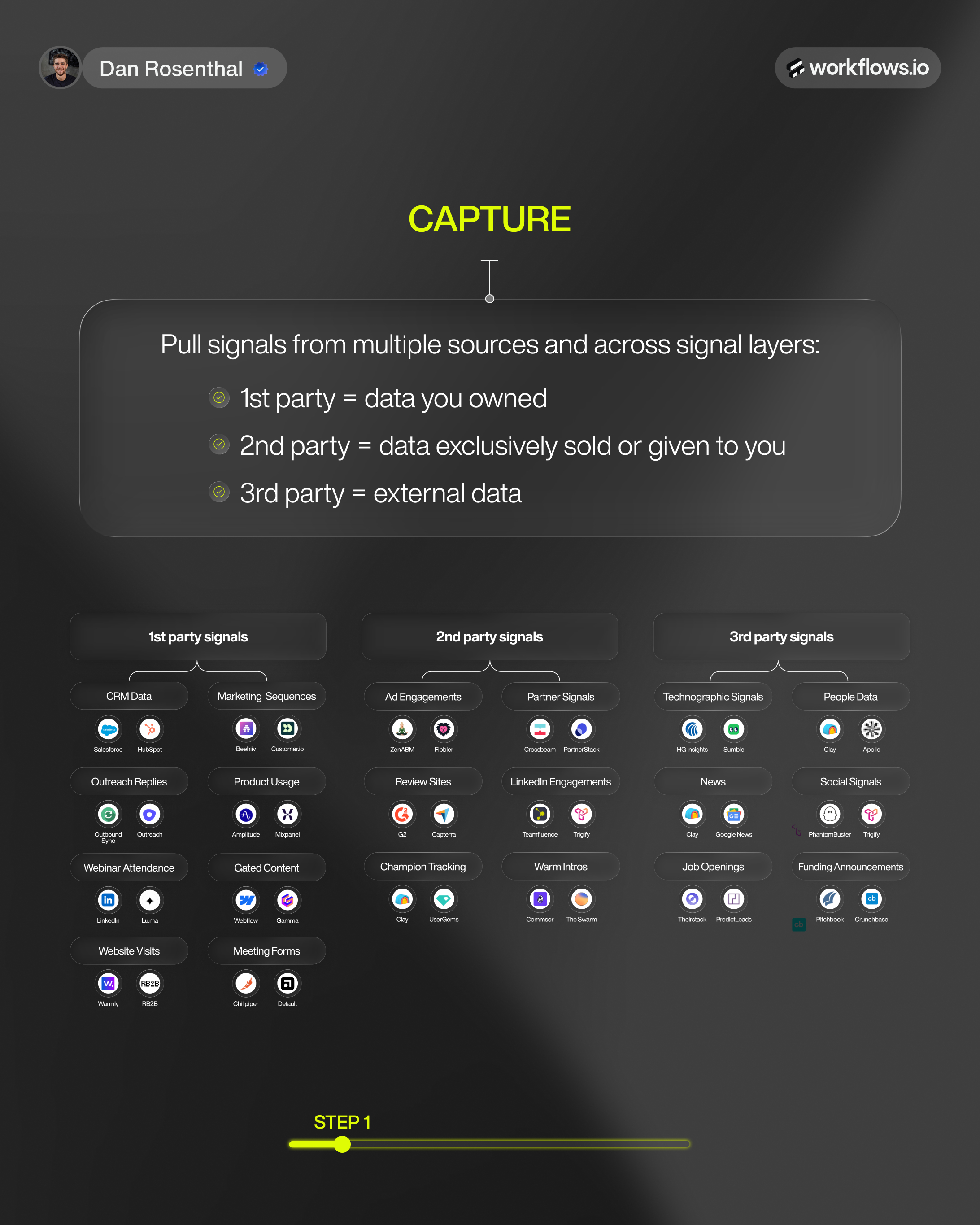
Pull signals from first, second, and third-party sources. Clay sits at the center as the orchestration layer, with tools like RB2B for website visitors, Jungler for LinkedIn signals, and Fibbler for LinkedIn ad engagement feeding into it.
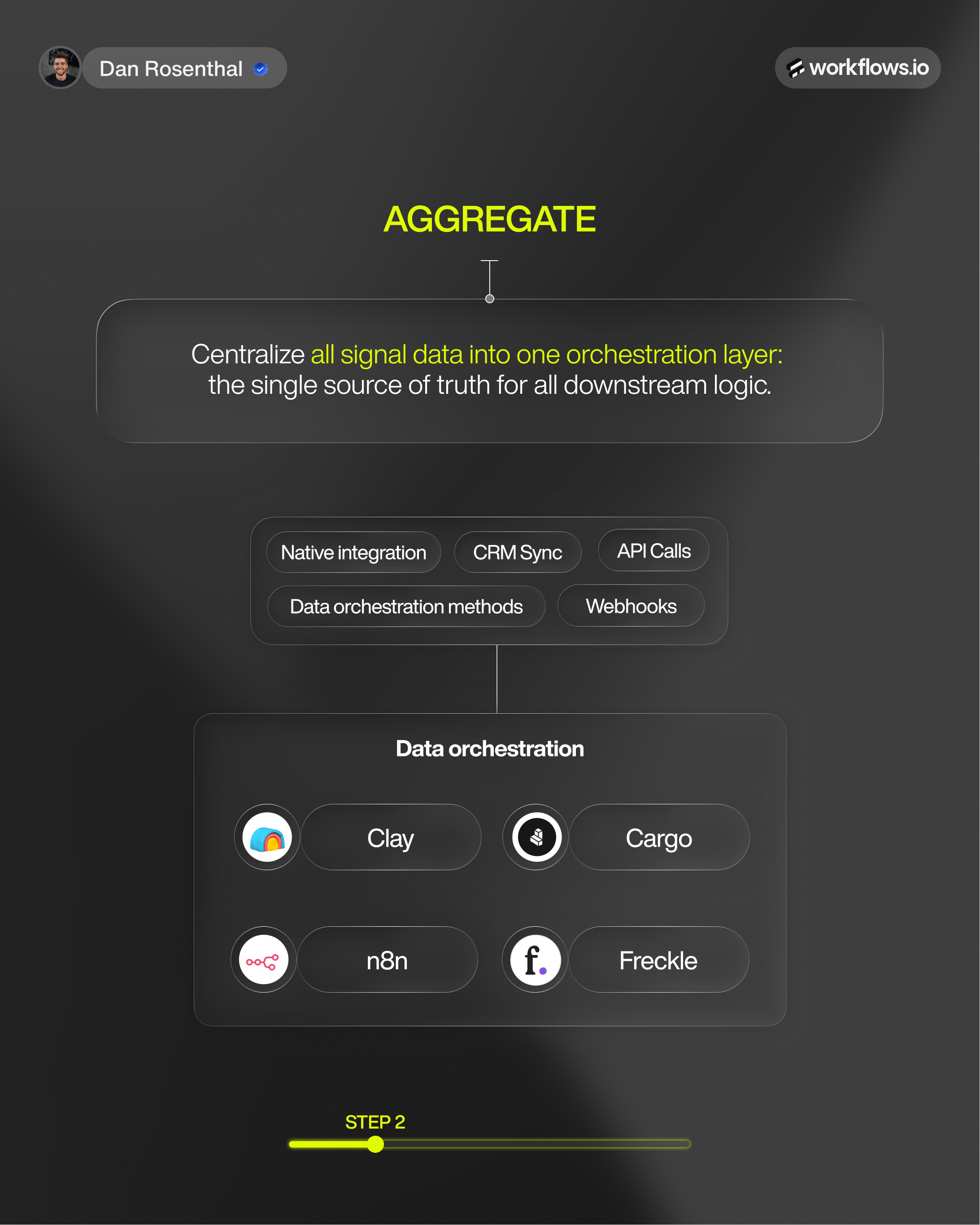
2. Aggregate:
Centralize every signal into one place. Clay is where most signal-based teams aggregate, with Cargo as an alternative for teams that want a custom workflow layer.
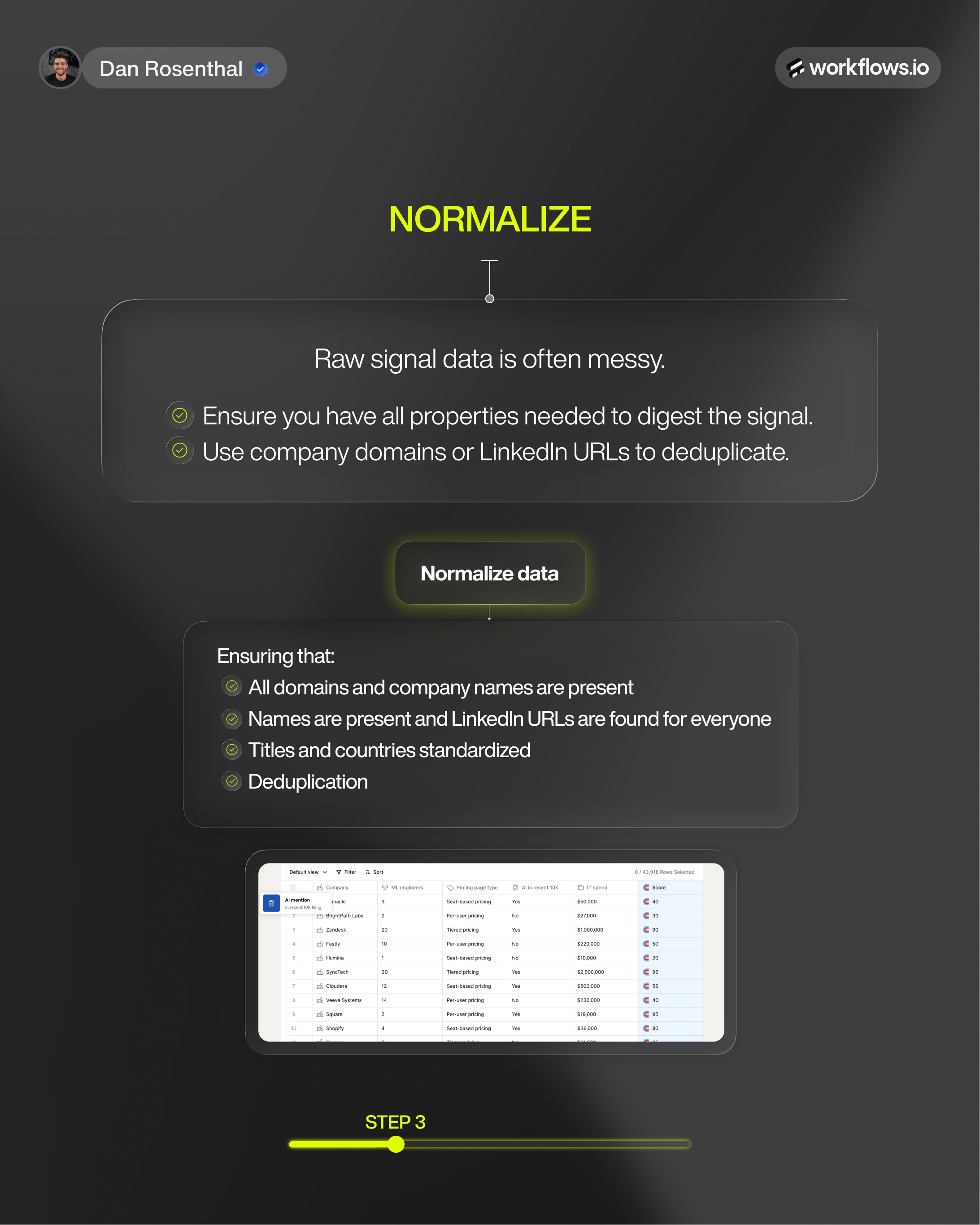
3. Normalize:
Standardize the format and deduplicate. The same account often generates three signals on the same day from different sources, and you only want to act on one of them.
Phase 2: Enrich and qualify
4. Enrich:
Layer on company and contact data. Apollo, Findymail, and BetterContact cover the contact and email side. HG Insights handles the technographic data.

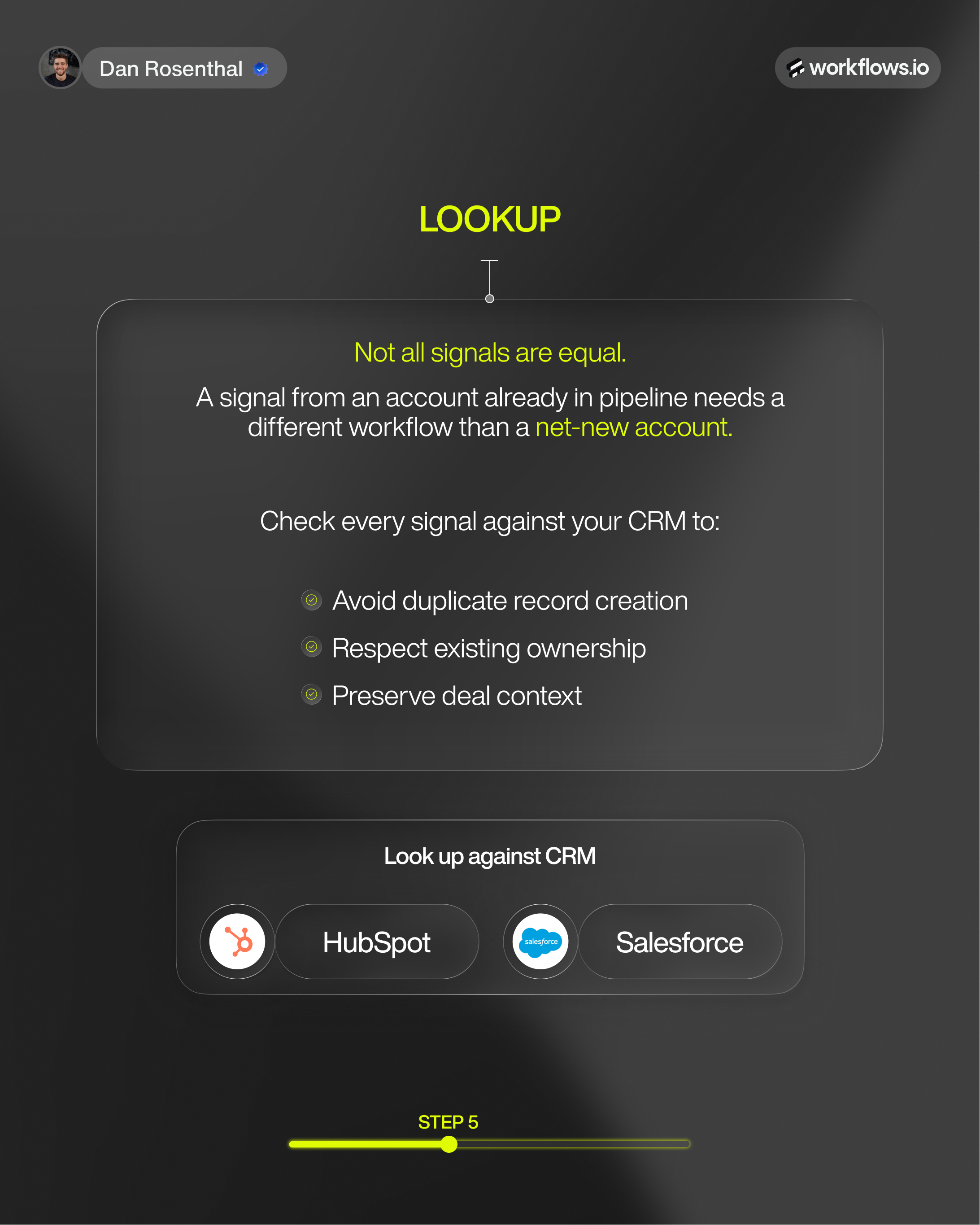
5. Lookup:
Check each signal against your CRM in HubSpot or Salesforce before acting. You do not want to outbound a prospect who is already in an active sales cycle with one of your AEs.
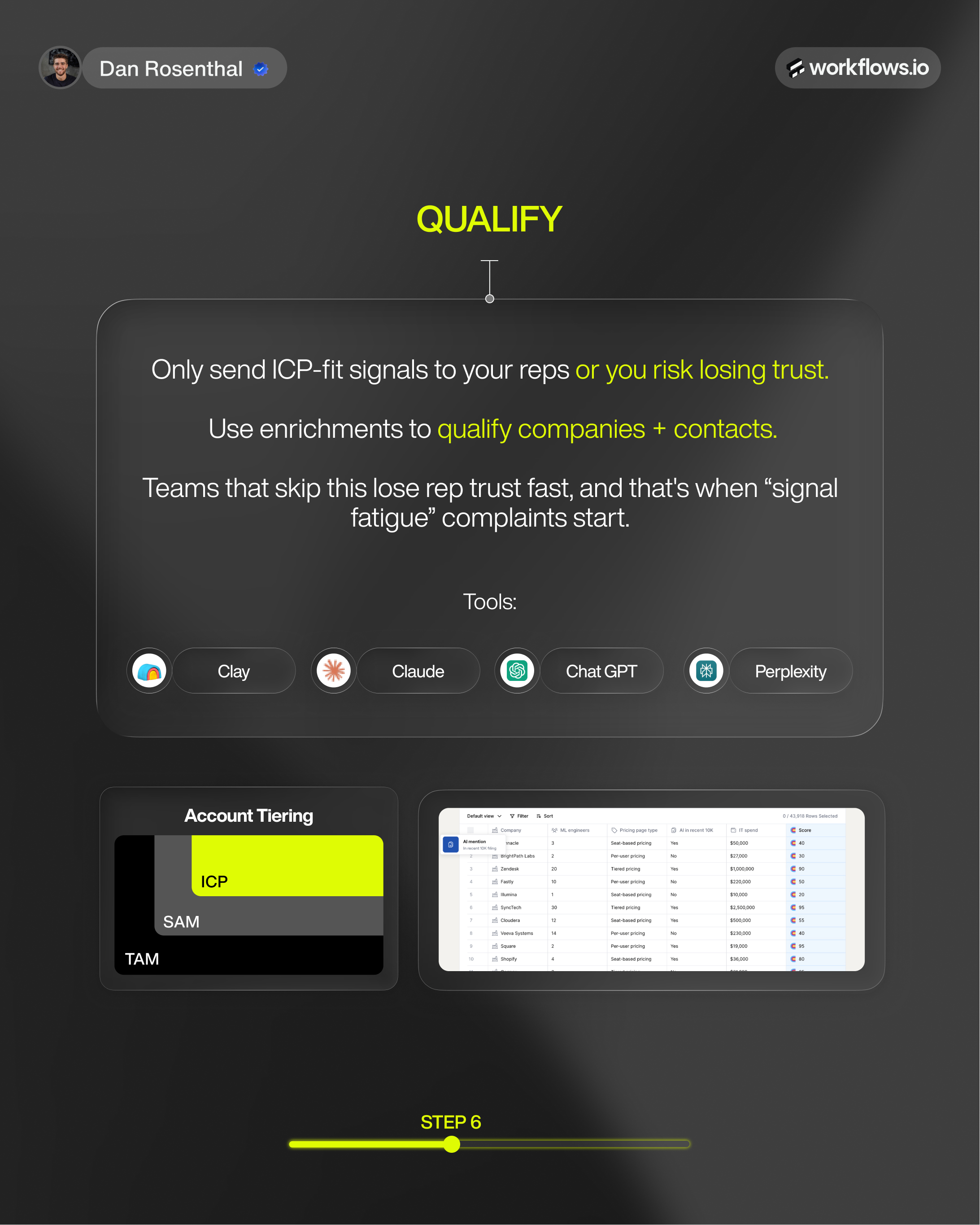
6. Qualify:
Pass only ICP-fit signals to reps. Use Clay's AI qualification or a Claude Code skill to filter out the noise so your reps see signals that actually match the buying committee at the right kind of company.
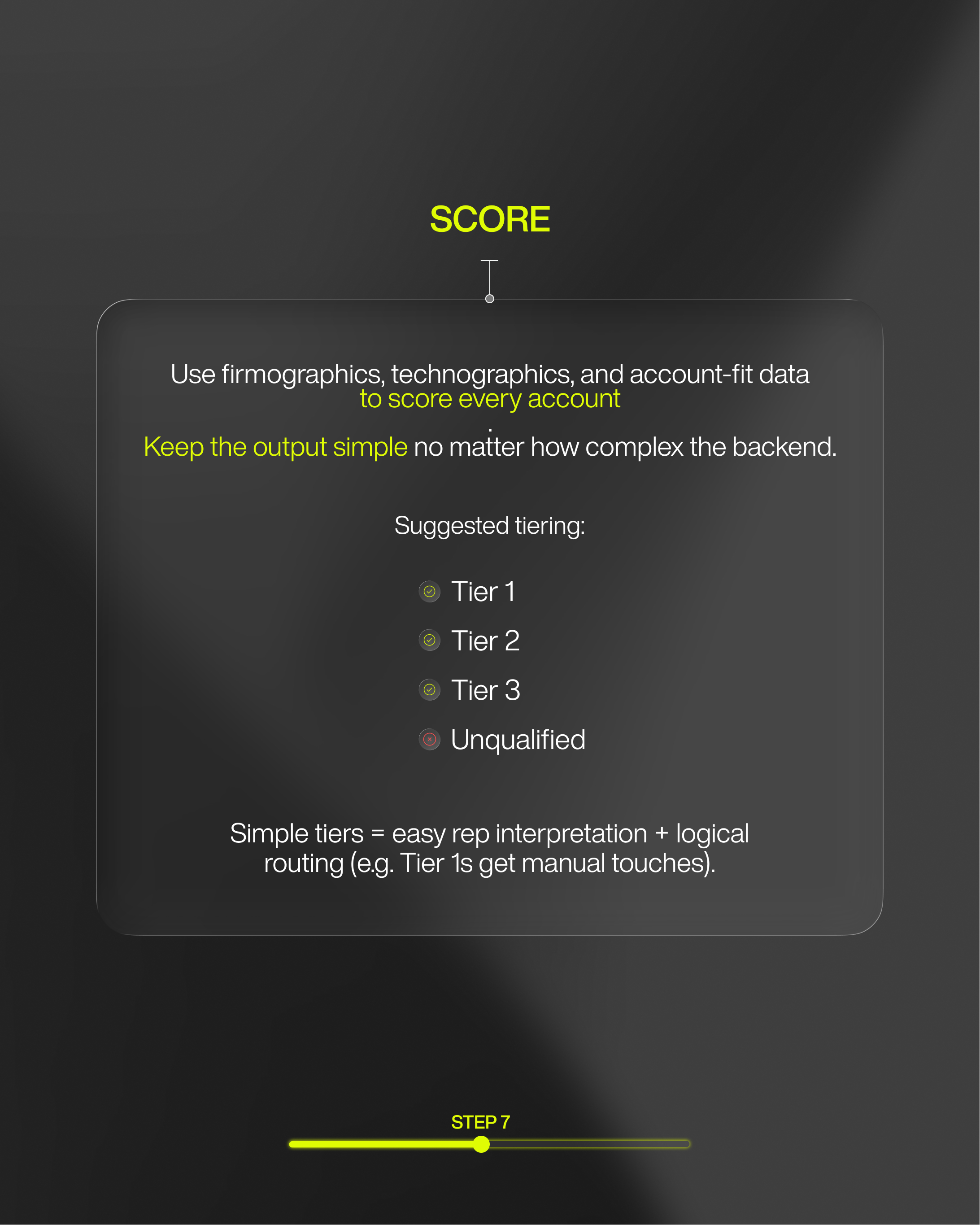
7. Score:
Tier each qualified signal into Tier 1, Tier 2, Tier 3, or Unqualified. Tier 1 signals get manual prospecting, and Tier 2 and 3 get automated outbound.
Phase 3: Segment and route
8. Segment:
Split signals by company size, industry, and geography so each segment can run on its own messaging playbook.

9. Route:
Assign signals to the right rep based on territory, account ownership, or specialty.

10. Sync:
Push the signal and any resulting outbound back to your CRM as a timeline event so the rep has full context the next time they look at the account.

Phase 4: Activate and track
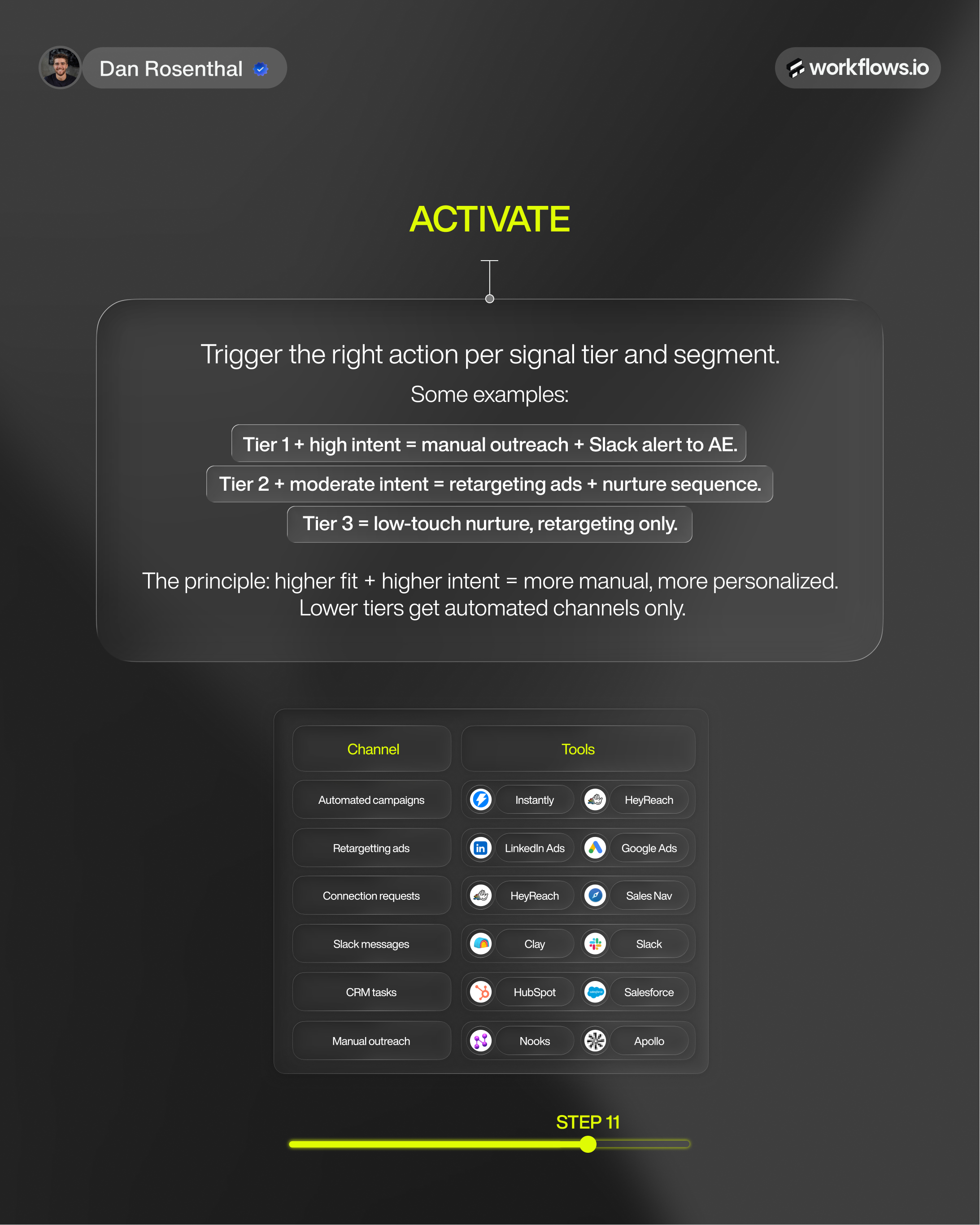
11. Activate:
Run the outbound. Tier 1 signals get manual touches by AEs working in their HubSpot sequencer. Tier 2 and 3 signals get automated sequences through Instantly for email and HeyReach for LinkedIn DMs. Some signals also fire Slack alerts to the AE or trigger LinkedIn ads to the prospect.
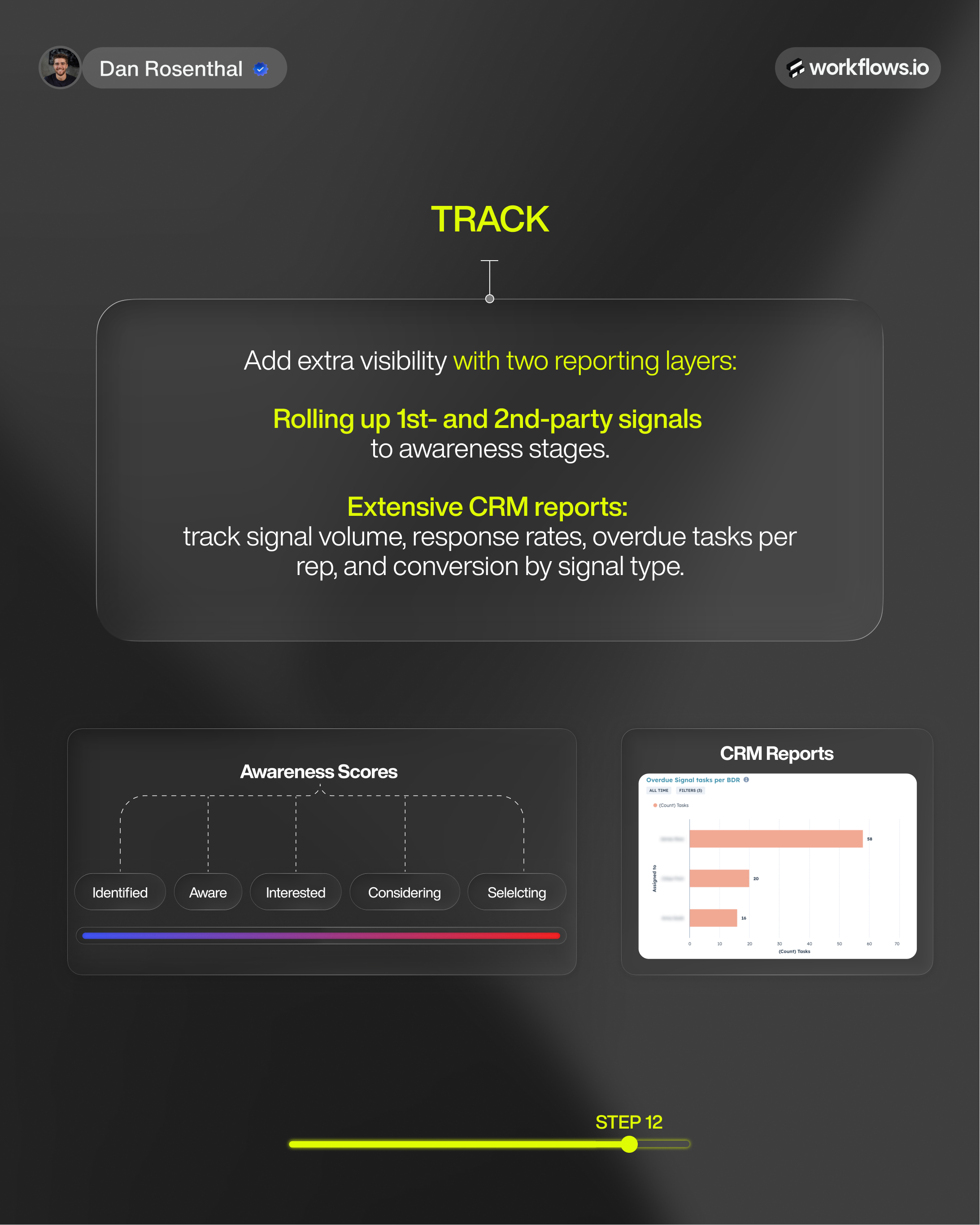
12. Track:
Roll signals up to awareness stages and pipeline reports. Each signal contributes to an account's awareness score, which moves the account through your funnel and tells your AE when an account is hot enough for a direct touch.
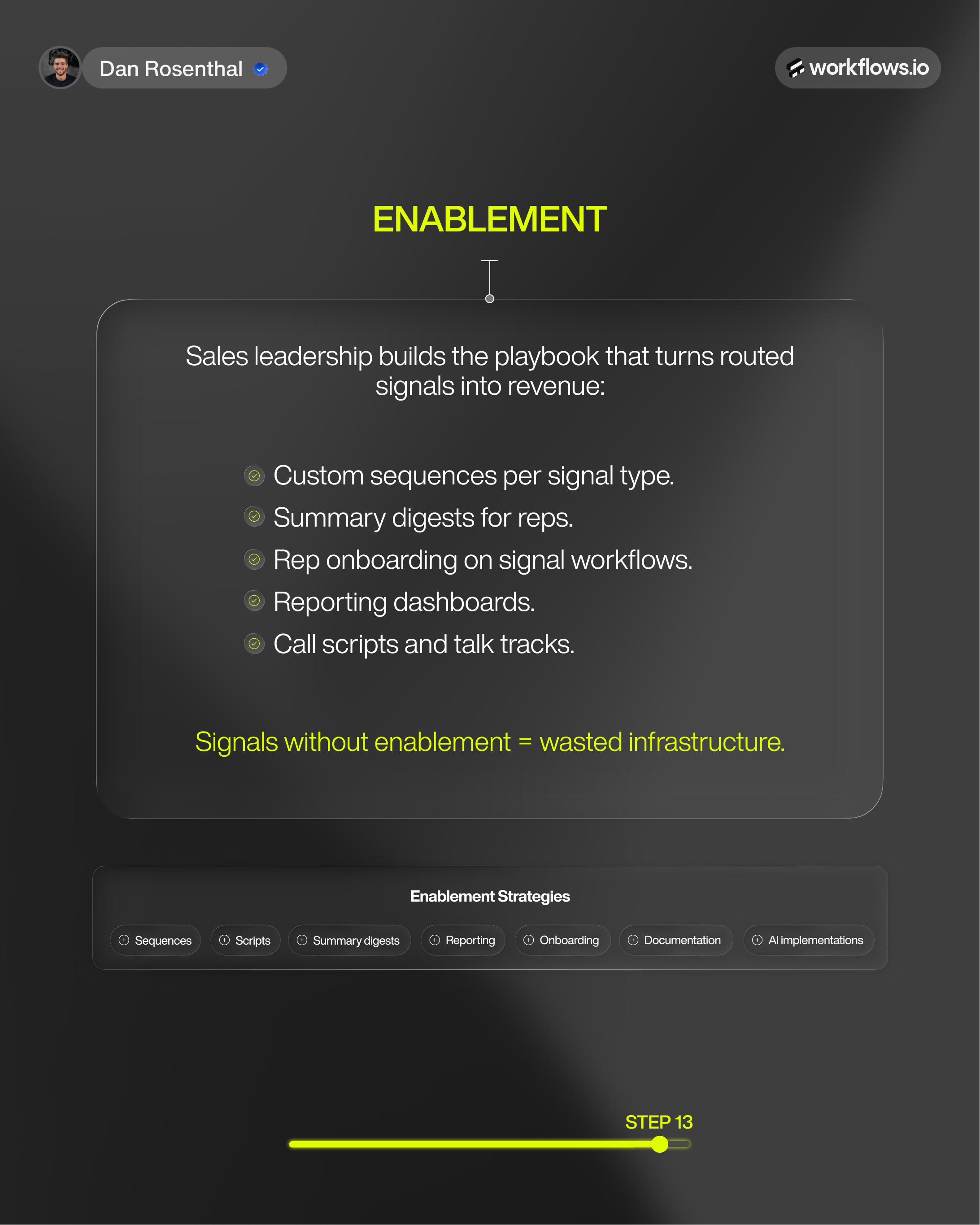
13. Enablement:
Equip reps with the sequences, daily digests, dashboards, and call scripts they need to act on the signals they receive in their inbox each morning.
Conclusion
The teams running signal-based outbound in 2026 are driving 20 to 40 percent of their pipeline from this motion alone. The teams still running only cold outbound at volume are watching their reply rates fall every quarter.
Capturing the signals is the easy part. The 13 steps above are what separates the teams turning signals into pipeline from the teams sitting on data nobody acts on.
If you want help wiring signal-based outbound into your stack, book a strategy call. We will walk through your current motion, identify the signals you already have access to, and map the activation layer to your CRM.
.png)
.png)

.png)







.jpg)







.png)